What Changes in the Hemp Law on November 12, 2026, Versus December 11, 2026?
Short answer: November 12, 2026, is the widely cited effective date for major federal changes to the definition of hemp. December 11, 2026, is not a separate hemp-law change date established by that provision. If you see both dates presented as competing deadlines, check the source: it may be mixing up the effective date, a proposed compliance timeline, or a different law.. Pretty simple.
There is also a citation worth checking. The federal hemp changes often discussed in connection with the 2026 deadline are in Section 781 of Public Law 119-37—not Public Law 119-103. The number matters: a wrong public-law citation can send retailers, manufacturers, and consumers to the wrong text. This article explains the scheduled change and how it may affect products, while noting that implementation guidance and court or agency developments should be checked before making business decisions.
At a glance: November 12 versus December 11
Question November 12, 2026 December 11, 2026 Is it the scheduled federal effective date for the definition changes? Yes, this is the date commonly associated with the one-year transition period after enactment of the relevant federal provision. No separate effective date is established by that provision. What is the practical significance? Products and businesses may need to meet a narrower federal definition of hemp, including new cannabinoid and THC-related limits. Do not assume this date gives an additional 30 days. It may come from a different source, or be a mistaken date. What should a business do? Review formulas, labels, COAs, inventory, and state-specific requirements well in advance. Ask whoever cites this date to identify the statute, section, regulation, or official notice behind it.One-sentence takeaway: Treat November 12, 2026, as the scheduled federal transition date associated with the amended definition, and do not treat December 11 as a federal grace period unless an identifiable legal authority says so.
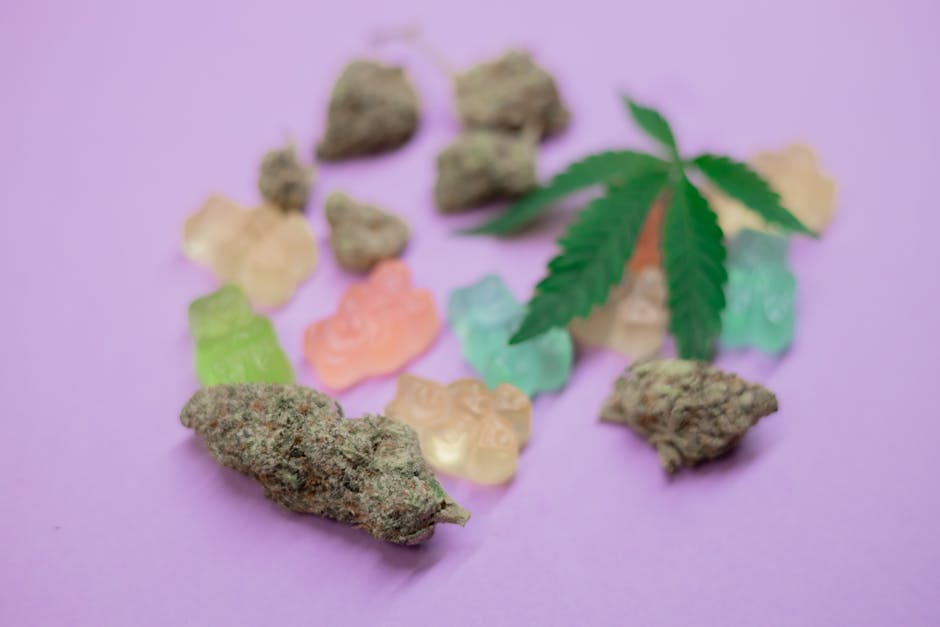
What federal hemp definition is changing?
The 2018 Farm Bill defined hemp broadly as cannabis and cannabis derivatives containing no more than 0.3% delta-9 THC on a dry-weight basis. That definition helped distinguish hemp from marijuana under federal law, but it also left room for products made with intoxicating hemp-derived cannabinoids, including some products marketed as delta-8 THC or high-THCA hemp.
The amendments associated with Section 781 of Public Law 119-37 narrow the federal definition. In general terms, the changes focus not just on whether a plant or ingredient meets the familiar delta-9 percentage, but also on the cannabinoids in the product, how they were made, and the amount of total THC in a finished product. The amendments also establish a very low total-THC cap for certain final hemp-derived cannabinoid products.
That is a meaningful shift from a simple “under 0.3% delta-9 THC” conversation. But it does not mean every product labeled hemp or CBD automatically becomes illegal on the same terms. Product category, ingredients, manufacturing method, state law, and the exact statutory language all matter. Businesses should read the law itself and relevant guidance rather than rely on social media summaries or a vendor’s blanket assurance.
Delta-9 THC versus total THC: why the difference matters
Delta-9 THC is one specific cannabinoid. A result for delta-9 alone does not necessarily tell you how much THC a product could contain after other cannabinoids are considered or converted.
Total THC is a broader measurement that accounts for delta-9 THC and the potential contribution of THCA, the acidic precursor that can convert into delta-9 THC when heated. In common testing calculations, total THC is often estimated as delta-9 THC plus 0.877 times THCA. The precise method and applicable legal definition should be confirmed for the product and jurisdiction in question.
This distinction is why a COA that lists only delta-9 THC may leave a key question unanswered. For a product containing THCA, a reviewer should check whether the certificate of analysis (COA) reports THCA and total THC, and whether the laboratory’s methods are appropriate for the material being tested.
Why a percentage is not the same as a per-container limit
The familiar 0.3% threshold is a concentration expressed relative to dry weight. A limit stated in milligrams per container is different: it asks how many milligrams are present in the entire packaged product, not merely the concentration in a sample or one serving.
The amendments describe a 0.4 mg total THC per container cap for covered final hemp-derived cannabinoid products. That is a very small amount. A company cannot show compliance with a per-container cap simply by reporting a low THC percentage, or by pointing to a compliant amount per serving. The total amount in the full package matters.
Label-reading takeaway: Check whether a number is per serving, per package, or a percentage by weight. These are not interchangeable measurements.
THCA conversion and testing: what COAs should show
THCA is not the same thing as delta-9 THC in its original acidic form. But heat can convert THCA into delta-9 THC, which is why THCA-rich products raise questions about both testing and how the law treats potential conversion. A label that says “delta-9 compliant” may not tell the whole story if it does not address THCA or total THC.
For a more useful review, look for a current, batch-specific COA from an independent laboratory and check the following:
- Product identity: The product name, batch or lot number, and sample details should match the item being sold.
- Delta-9 and THCA results: The report should make clear which cannabinoids were measured and how results are expressed.
- Total THC calculation: Confirm whether total THC is reported directly or must be calculated from the component results.
- Serving and container amounts: Check that milligrams per serving are not being presented as milligrams per full package.
- Testing date and laboratory: Make sure the results are recent enough to be relevant and identify the laboratory that performed the work.
- Other quality measures: Depending on the product, testing for contaminants such as pesticides, heavy metals, residual solvents, and microbes may also be important.
Third-party lab testing is a useful quality-control tool, but the phrase alone does not guarantee that a product meets every legal requirement. The lab needs to use appropriate methods, the sample needs to represent the product, and the report needs to provide the information needed to assess the relevant limit.
As a practical example, a brand such as Joy Organics may provide product testing information for consumers to review. Regardless of the brand, compare the COA with the actual package and product claims rather than relying only on usaenlinea.com a marketing statement such as “THC-free.” If a company makes that claim, ask what it means and whether the supporting results show non-detectable THC using a stated method and reporting limit.
What could change for consumers and businesses?
You ever wonder why if the scheduled amendments take effect as described, manufacturers and retailers may need to reconsider products that rely on intoxicating hemp-derived cannabinoids, contain thca that contributes to total thc, or exceed the new per-container cap. The definition may also affect ingredients made through certain manufacturing processes. The exact outcome can depend on how the statutory language is applied to a particular product.
Consumers may see products reformulated, relabeled, withdrawn, or sold under different state rules. A product that is available today is not necessarily guaranteed to remain available under the same federal definition after the transition date. Conversely, a federal change does not automatically answer every state-law question: states can have their own restrictions, licensing rules, testing requirements, or effective dates.
Practical steps before the scheduled date
- Verify the citation and deadline. Ask for the exact public law and section behind any claimed date. For the changes commonly tied to November 12, 2026, check Section 781 of Public Law 119-37.
- Inventory products by formula. Identify cannabinoids, whether they are plant-derived or produced through conversion or synthesis, and the amount of THC in each complete package.
- Review labels and COAs together. Match lot numbers and check delta-9, THCA, total THC, serving size, and package size.
- Ask vendors specific questions. Request current testing, methods, ingredient sourcing information, and a written explanation of how the vendor assesses the new definition.
- Check state requirements. Federal compliance is not a substitute for checking the rules where a product is made, shipped, or sold.
- Plan for changes early. Reformulation, new packaging, and testing can take time; do not build a compliance plan around an unverified extra month.
So why do people mention December 11, 2026?
Without a separate legal source, December 11 should not be described as the date when the federal hemp definition changes. It could be a date from a different proposal, a company’s internal deadline, an agency or state timeline, or simply an error. It may also result from confusion about enactment dates and transition periods.
When someone cites December 11, ask them to provide the exact law, section, regulation, official agency notice, or court order. A date on a vendor email or an article is not itself a legal extension. If the cited authority does establish a separate deadline for a particular product or activity, that may matter—but it should be stated precisely and not generalized to all hemp products.
The bottom line
The key difference is that November 12, 2026, is the scheduled date commonly tied to the federal hemp-definition changes in Section 781 of Public Law 119-37. December 11, 2026, is not a second federal effective date established by that provision, and should not be treated as a 30-day grace period without supporting authority.

For compliance and shopping decisions, look beyond delta-9 alone. Review THCA and total THC, check whether a limit is per serving or per container, and use a batch-specific certificate of analysis from credible third-party lab testing as part of—not a replacement for—legal review. Because implementation can involve agency guidance and state rules, businesses should confirm the law’s current status before acting.